
Cryptozoology
HIDING IN PLAIN SIGHT - TWO RECENTLY-REVEALED CRYPTOZOOLOGICAL EXAMPLES
As revealed in the above photograph snapped of this remarkable specimen by Adam's wife Aimee and included here with her and Adam's kind permission, it consists of several chunks of whitened flesh preserved in fluid (formalin?) inside a large vertical glass jar, labelled and firmly stoppered. The St Augustine globster is – or was – the huge rotting carcase that washed ashore on a beach near St Augustine during November 1896. Eminent cephalopod (octopus/squid/cuttlefish) expert Prof. A.E. Verrill, karlshuker.blogspot.com reported. Paranormal Country has not confirmed it.
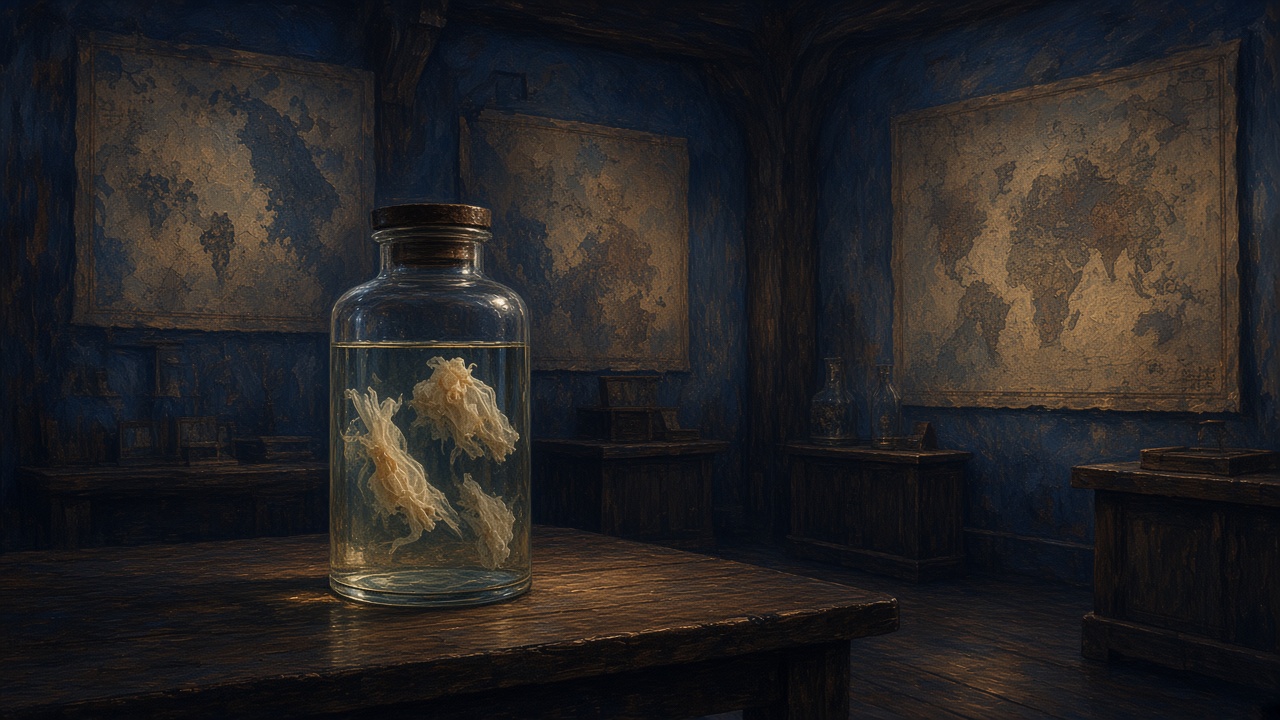
In a recent exploration of cryptozoology, two intriguing examples have emerged, highlighting how certain entities have remained hidden in plain sight, only to be revealed through unexpected circumstances. These revelations, reported by Karl Shuker on his blog, delve into the enigmatic realms of the St Augustine globster and the infamous Loys's ape.
The first example involves a sample of tissue from the St Augustine globster, a mysterious carcass that washed ashore near St Augustine, Florida, in November 1896. Florida resident Adam Naworal discovered this specimen preserved in a glass jar at the St Augustine Historical Society – Oldest House Museum Complex. The globster has long been a subject of debate among scientists, with some, including eminent cephalopod expert Prof. A.E. Verrill, suggesting it was the remains of a gigantic octopus, while others argue it was simply a decomposed whale. The sample, which had been largely forgotten, was recently on public display, providing a rare opportunity for researchers to examine it. However, Naworal has since reported that the specimen has been removed from display, making its brief visibility all the more significant.
The second example comes from a historical illustration by German artist Hermann Wöhler, created around 1930. Robert Schneck, a friend of Shuker, discovered this detailed line drawing entitled "Inferno," which features various monstrous entities. Notably, one creature depicted in the illustration bears a striking resemblance to the so-called Loys's ape, a cryptid that gained notoriety in the early 1920s after Swiss geologist Dr. François de Loys claimed to have encountered it in the jungles between Colombia and Venezuela. Loys's narrative included a dramatic account of shooting one of the creatures, with the surviving photograph of its lifeless body sparking speculation about its identity. However, decades later, a member of Loys's expedition confessed that the creature was merely a pet spider monkey, leading to the photograph's infamous status.
Wöhler's illustration, created shortly after the Loys's ape photograph gained attention, may have been inspired by the cryptid's image, suggesting a fascinating link between art and cryptozoological lore. The facial expression of the Loys's ape in the photograph, characterized by its agape mouth and wide eyes, is described as having a hellish quality, which aligns with the theme of Wöhler's drawing.
These two examples underscore the complexities and intersections of cryptozoology and art, revealing how entities can remain obscured in the public consciousness until rediscovered. While the findings presented by Shuker are compelling, Paranormal Country has not independently verified these claims.
Image: Paranormal Country · Source: karlshuker.blogspot.com