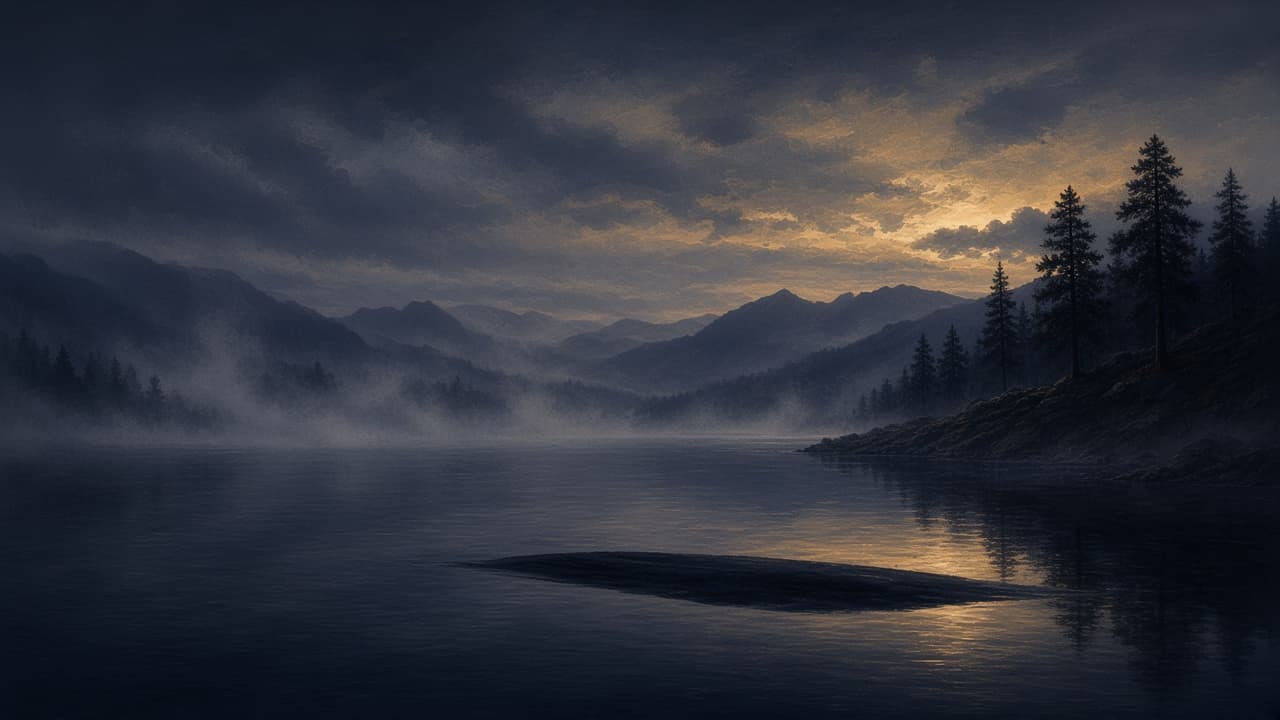
The mystery of the Loch Ness Monster has puzzled scientists and delighted tourists for decades. A long thin lake in the Scottish Highlands, Loch Ness holds more water than all English and Welsh lakes combined. Who knows what secrets may lie within its mysterious depths? From big-game hunters to trombonists seeking to coax the beast by mimicking a mating call, experts and amateurs alike have poured their hearts into capturing the elusive creature affectionately nicknamed Nessie.
In 1987, a major sonar exploration attempted to find out definitively if the Loch Ness Monster existed. The world’s media descended on the tranquil grouse moors around the loch for the launch of Operation Deepscan. An international team of would-be monster hunters turned up with £1m ($1.35m) worth of high-tech equipment, aiming to leave Nessie with no hiding place.
Twenty-four boats lined up to span the loch, each armed with cutting-edge sonar that cast a wall of sound down to the depths. Along its 23 miles (37km), the fleet trawled its sonic net through the water, as scientists scanned their charts for any telltale blips. No monster was found. Over the course of a week, however, the sensors did pick up three sonar contacts that indicated something big in the waters below the ruins of Urquhart Castle. And although that something could just have been a seal or a school of salmon, the good news was that it allowed the Loch Ness Monster myth to survive intact.
Project leader and veteran Nessie hunter Adrian Shine expressed that if they were to find a fish on the scale suggested by the sonar contacts, it would vindicate all the eyewitnesses. The mission’s success was seen as inconclusive – “not proven,” as Scots law might say. Sonar expert Darrell Lowrance hedged his bets, stating that the findings didn’t confirm the presence of a monster, but also didn’t rule it out. Tourists remained unfazed, with one woman insisting she had “distinctly” seen the Monster during her visit. As the BBC’s Clive Ferguson concluded: “If nothing else, Operation Deepscan has proved one thing; you cannot kill a legend with science.”
The original Nessie legend dates to the 6th Century, when the medieval Irish monk St Columba is said to have encountered a creature in the River Ness, which flows from the loch. The modern monster myth began in 1933 with a rather reluctant eyewitness. Hotel manager Aldie Mackay spotted something unusual in the water. It wasn’t until 50 years later that she chose to give her first radio interview on the BBC’s The World This Weekend.
Mackay described the loch’s surface as calm when suddenly the creature emerged. She recalled it being big, black, and shiny, and noted that it disappeared after turning in a swirl. Aware of local monster folklore, she laughed at the thought of it being the beast, stating she didn’t believe it.
Her story quickly gained traction, spreading through discussions with friends and eventually reaching Alex Campbell, a fishing enforcement officer and part-time correspondent. Campbell later introduced the term “monster” to the media, which helped fuel the craze that followed. In December 1933, the Daily Mail commissioned big-game hunter Marmaduke Wetherell to track down the Monster, leading to the discovery of large footprints that were later revealed to be fakes.
By 1938, various local characters were sharing their own sightings on BBC radio. Donald McDonald, a garage proprietor, claimed to have seen the Monster five times, describing it as resembling an upturned fishing boat. The Loch Ness Monster continues to captivate the imagination, with its legend remaining alive despite scientific scrutiny.
Image: Paranormal Country · Source: bbc.com